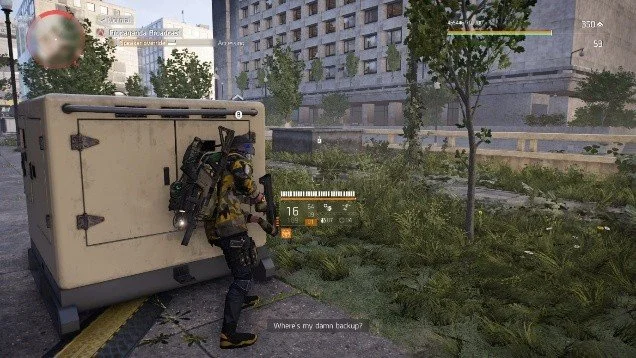
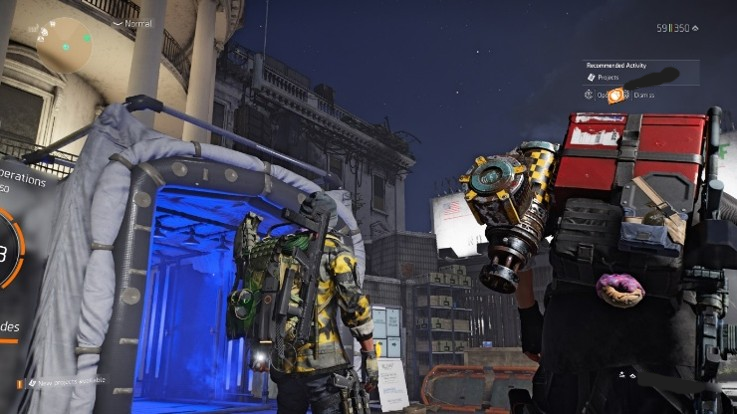
Stories in Ruin: Storytelling in Tom Clancy’s The Division 2
This is my analysis of the micro narratives, environmental storytelling and the lighting and colours used within the world of the division and how they add to the main narrative hooks that are told through the characters you encounter.
Download the PDF version Here
Stories in Ruin: Storytelling in Tom Clancy’s The Division 2
Introduction
In this essay I will discuss the story of Tom Clancy’s The Division 2 (hereon known as TD2), analysing the micro narratives, environment and lighting. The game TD2 is a third-person looter-shooter and is the second game in The Division franchise, the game has the player act as a member of the division an agency set up by the U.S. government following Operation Dark Winter, a high level government tabletop exercise simulating a smallpox bio terror attack on the U.S. (O'Toole, Mair, & Inglesby, 2002) in June 2001 under the reformed Presidential Directive 51 (Federal Emergency Management Agency, 2007). In the game’s universe a bio terror attack on black Friday in 2015 decimated the world population and infrastructure, within this second game set in the U.S. capital of Washington D.C. and 7 months after the outbreak the player must drive out three enemy factions to restore order and government control over the city. These factions are called the Hyenas, former gang members. True Sons, traitors of the Joint Task Force (JTF) who took militant action against the infected. And finally, the outcasts who feel wrongly imprisoned on Roosevelt Island by the JTF (later True Sons). The methods I will use to analyse the game are micro narratives which are short segments of story that are woven into a wider story and in this case these are the main and side missions the player comes across in the game, the environment tells its story through the visuals to tell the player what has happened in the past 7 months, and finally the lighting which is used to convey hope for the future but a heavy reliance on the division.
Micro Narratives – Regaining control of Washington
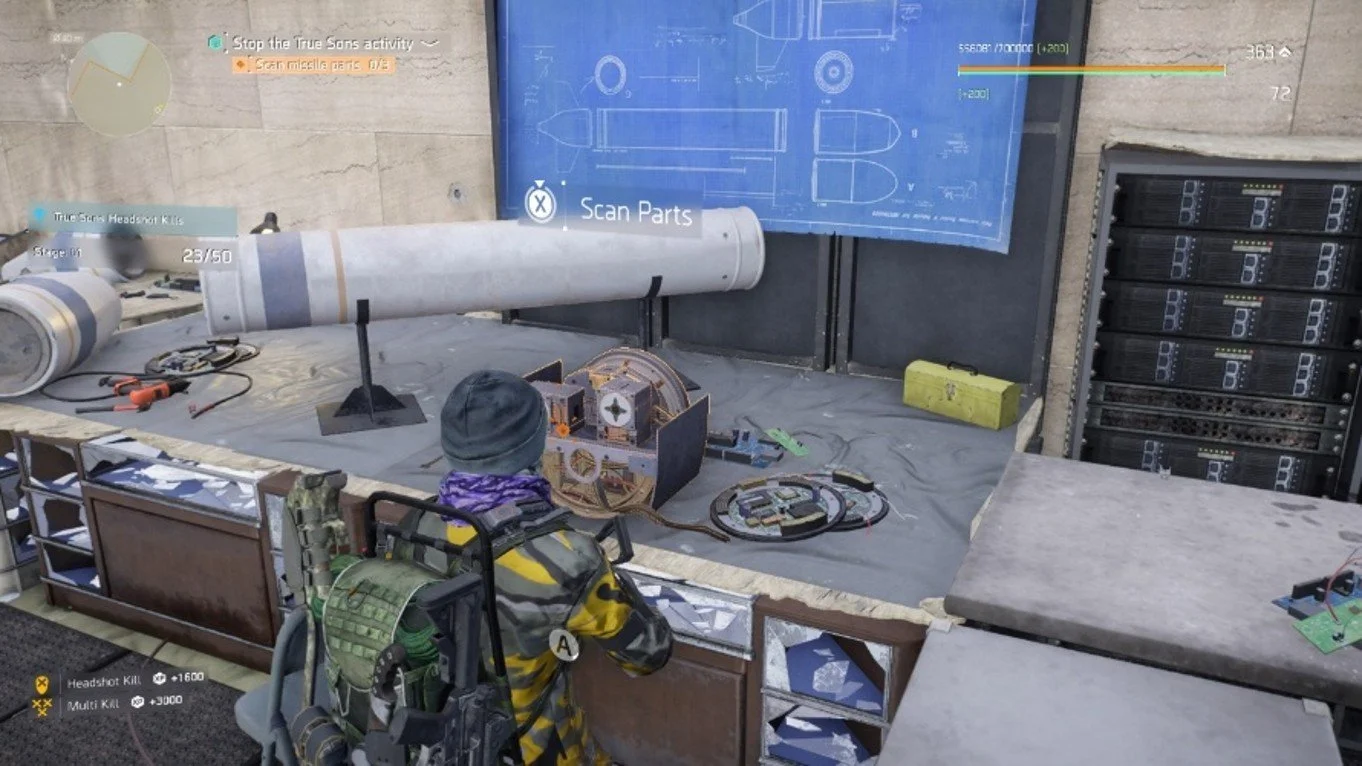
In TD2 there are a total of 12 main missions and 3 strongholds for the player to complete each of these missions have a self-contained narrative that push forward the main overarching narrative of the game. A micro narrative as defined by Jim Bizzocchi are “Smaller moments of narrative flow and coherence that occur within a broader context of game play.” (Bizzocchi, 2007), this means that within the game there are 15 separate narrative events happening that all ultimately add up to competing the players goal of regaining control over Washington D.C. In each mission there is an ample number of objectives for the player to complete when in the mission area as shown below in Fig.1.
Fig.1 the player completing one of the mission tasks in the main mission Air & Space Museum from my own gameplay, Source: Tom Clancy’s The Division 2, Ubisoft Massive. Accessed 22/05/2023.
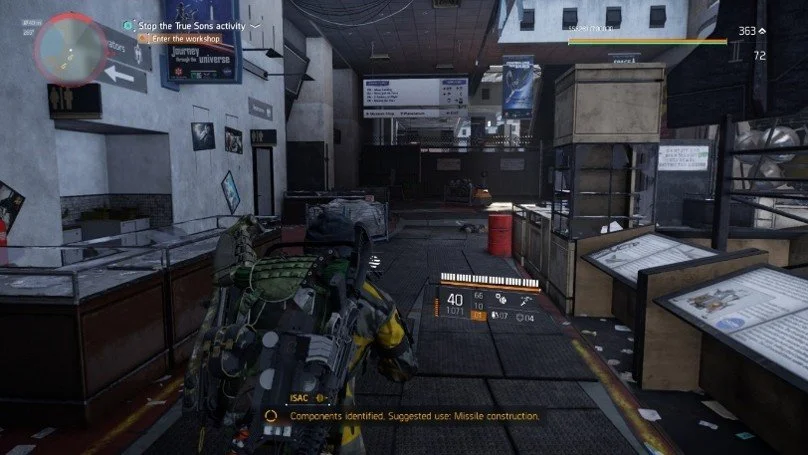
These objectives count as another form of micro narrative as they are what propel the mission forward to its conclusion, in this instance in Fig.1 the player is investigating mechanical parts that are on workbenches around the currently accessible mission area to find out what their purpose is for the faction being fought, this is revealed when the player completes this task as seen in Fig.2
Fig.2 the player being told by ISAC what the components are for in the main mission Air & Space Museum from my own gameplay, Source: Tom Clancy’s The Division 2, Ubisoft Massive. Accessed 22/05/2023.
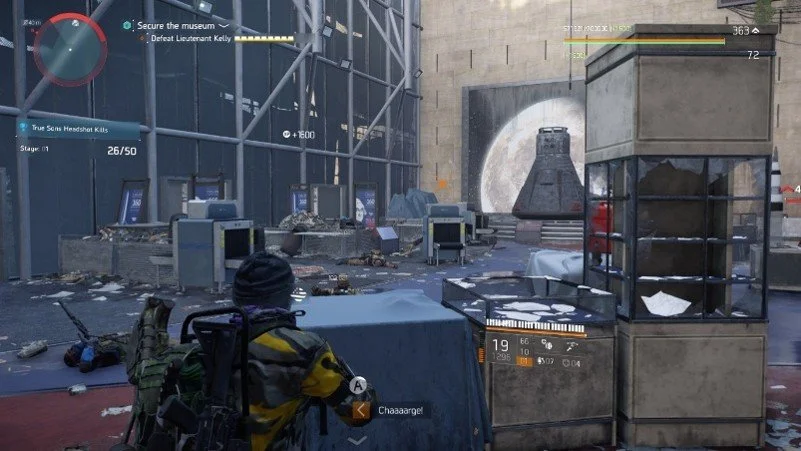
And in Fig.2 we see the payoff for that micro narrative as the in game AI ISAC (Intelligent System Analytic Computer) tells us that those components are going to be used to assemble a missile system, the player now will understand why there are bits of missile casing near these components as you can see in Fig.1 this small narrative event gives the player more information about the type of people that are running the operation against them and about their ultimate goals. By adding this small narrative, it then gives the player a drive to eliminate the threat in this area before they can use this system against their own base of operations or a local civilian settlement, this then in turn propels the mission forward to the climax against the boss of this ‘workshop’ and the player’s mission then switches to eliminating a member of the faction’s leadership team which is shown in Fig.3.
Fig.3 the player’s objective being updated to eliminate the lieutenant in the main mission Air & Space Museum from my own gameplay, Source: Tom Clancy’s The Division 2, Ubisoft Massive. Accessed 22/05/2023.
Here in Fig.3 it shows the final objective of the mission which is “Defeat Lieutenant Kelly” and this then wraps up the mission’s micro narrative in the game as after this objective has been successfully completed the mission ends and the player is fed a small amount of info found out by background characters to further aid them in later missions. And with the successful completion of these missions they wrap up those enclosed micro narrative but they are only “intermediate successes and failures [that] act as interim resolutions of localised [sic] climaxes” (Bizzocchi, 2007) as the game hasn’t been completed with this one mission nor has this faction been ousted out of D.C yet but the player has regained some of D.C back and put it back in control of the remnants of the government and JTF.
Environmental Storytelling – Civil War and panic
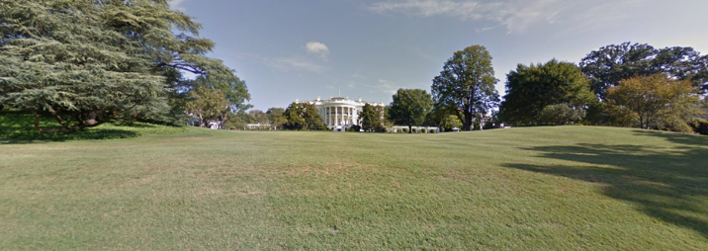
Another storytelling technique used within TD2 is environmental storytelling to convey stories of the past to the player without the need to dedicate parts of the main story to explaining the background to what has happened. And so, within the city of Washington D.C. there are multiple destroyed and well-fortified buildings to show that there has been conflict in the city in the recent past. The first scene the player is presented with when starting the game and whenever they return to is the state of the White House which serves as the Divisions Base of Operations (BoO) below in Fig.4 shows the modern-day White House south lawn which is a view the players of TD2 will know fairly well as it is an image that has been ingrained in the public image of the United States for most of modern history.
Fig.4 View of the White House from the south lawn in the modern day, Source: Google Street View from Aug 2016. Accessed 02/05/2023
This view of the White House is a symbol of the United States as a unified nation under the federal government and the president, but since the Black Friday attacks in New York and subsequent spread of the virus the White House has turned into a place that wouldn’t look out of place as a U.S. Army command post in an urban warzone as shown below in Fig.5
Fig.5 View of the White House from the south lawn in the game universe, Source: My own gameplay in Tom Clancy’s The Division 2, Ubisoft Massive. Accessed 23/05/2023
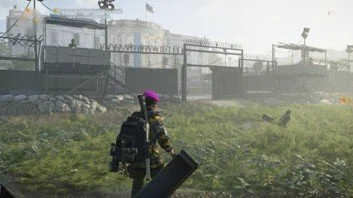
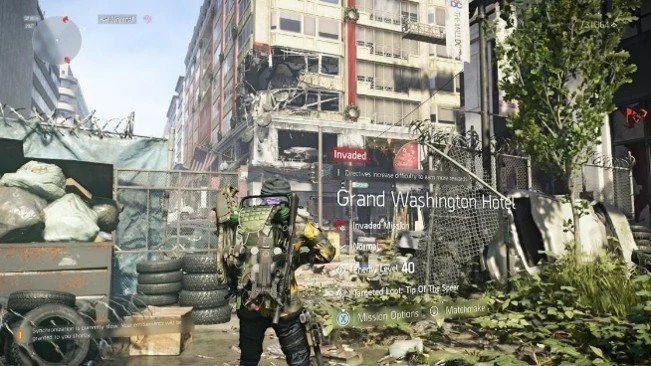
Fig.5 shows the rapid transformation of the White House from a government building into a fort that is housing the last forces of the old government the JTF and now Division agents, the developers in my opinion chose to have the base of operations be at the White House as it is a building known the world over and when players see that it looks like it has been through a war then they are going to believe the story that the world is trying to tell them as Carson puts it “If […] the attraction centres [sic] around pirates […] every texture you use […] every turn in the road should reinforce the concept of pirates” (Carson, 2000) this concept that Carson writes about is applied here by the creators of TD2 as they seek to show the player that the city of Washington is in the midst of a fierce civil war and so they use the barbed wire fencing, and iron spikes and lookout posts to evoke the feeling of war and being attacked and they are preparing for another attack, whilst the boarded up windows show that there aren’t enough materials or specialists to make the required repairs to the building, this in the players head reinforces that fact that Washington is no longer the peaceful bastion of the U.S. but is now the site of a power struggle between the player and the factions that populate D.C. in Fig.6 and Fig.7 there are more examples of how the civil war has affected the people and the city of D.C. as the buildings are falling over or are completely destroyed.
Fig.6 Entrance to the Grand Washington Hotel Mission showing damage sustained from an ammo explosion, Source: My own gameplay in Tom Clancy’s The Division 2, Ubisoft Massive. Accessed 23/05/2023
Fig.7 The Cinderblock control point held by friendlies and it is located in a destroyed and burned down building, Source: My own gameplay in Tom Clancy’s The Division 2, Ubisoft Massive. Accessed 23/05/2023
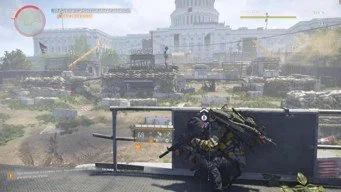
Through the players interpretation of remains this is a concept mentioned by Fernandez-Vara and they describe it as “This type of indexical storytelling is constituted by the traces left behind by other agents who have been in the space before. The remains are objects that those agents have modified previously.” (Fernandez-Vara, 2011) the player can assess the buildings that they have come across and can from that figure out what might have occurred between the factions fighting in the city before they arrived to make the buildings look like this and it’s also a reminder that they aren’t the only people fighting in this city there is fighting occurring somewhere around this too links in with another term Fernandez-Vara uses which is detective work as “There are games where the gameplay revolves around discovering the history of the game world, what has happened before the player enters the space.” (Fernandez-Vara, 2011) and in the world of the division the player becomes a detective to figure out the story behind what has happened in D.C. as they can go around discovering ECHOs and collectables that fill them in on what has occurred in the 7 months since Black Friday and the state of the buildings is another hint to how the city has turned from peace to war, and in some cases panic as the civil war broke out. As the True Sons faction split from the JTF they made base at the U.S. Capitol building and fortified it as shown in Fig.8
Fig.8 Start of the True Sons Stronghold mission at the U.S. Capitol, Source: My own gameplay in Tom Clancy’s The Division 2, Ubisoft Massive. Accessed 23/05/2023
Fig.8 also shows that the True Sons are ready to fight a civil war with them being heavily fortified and entrenched at the Capitol building, showing the player that if they are going to fight then it won’t be easy and everything in the city is set up to fight a war.
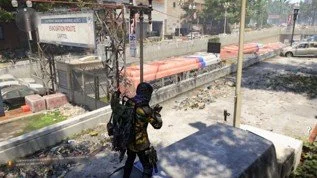
Fig.9 An evacuation route in the north west of the city, Source: My own gameplay in Tom Clancy’s The Division 2, Ubisoft Massive. Accessed 23/05/2023
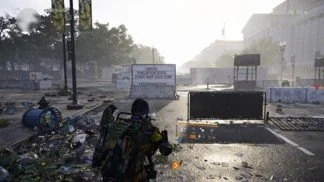
Fig.10 Another evacuation route in the centre of the city, Source: My own gameplay in Tom Clancy’s The Division 2, Ubisoft Massive. Accessed 23/05/2023
With the True Sons being more militant than the JTF are the remaining population tried to flee again after the first wave fled whilst the virus was active as can be shown in Fig.9 and Fig.10 there were multiple evacuations routes set up for civilians to escape the virus and then the conflict that was taking over the city and as panic sets in the majority of the surviving population will have tried to flee the city in fear for their lives either from any remnants of the virus or from the ongoing civil war going on in the city. The images above illustrate that the city is no longer safe and that at every turn there is something to reinforce the feeling of a civil war.
Lighting and Colour – A new dawn
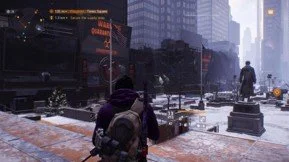
A third way in which the Division as a series tells a story is through the lighting and colour selection, as in the original Division the colour plate was very limited and tight on cold and dark colours that would often be associated with a city environment as well as everything being coated in a layer of white snow which further cools the scenes the player experiences down, and the only warm colours that are used predominantly in the game are Yellow and Orange, which according to Bjorn Vredenberg “yellow is used extensively to tell the player that he is entering an infected area or to keep reminding the player that he is playing in a post-apocalyptic world.” (Vredenberg, 2017) and the colour orange is used to “signal safe houses where players can hide from the cold” (Vredenberg, 2017) but orange is also used as a colour of hope in the division series as a whole as it is the colour on the agents wristwatches, the colours of the Division as shown in Fig.11 mainly consists of mute greys and blacks for the majority of its colour pallet.
Fig.11 Player agent standing in Times Square New York after Black Friday and activation, Source: My own gameplay in Tom Clancy’s The Division, Ubisoft Massive. Accessed 23/05/2023
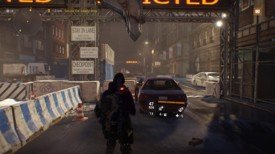
In Fig.11 the area around the player is very harsh and unwelcoming due to the cold colour pallet used by the developers and this can be linked back to the feelings of society in this moment as they are feeling down and out of it as their former lives that they were comfortable in have been ripped away, the sunlight emission within this game also seems to be colder and more on the blue side than what you would expect from the sun. And the lighting that is used is noticeable more at night time as this game is exceptionally dark at night time almost unnaturally so even in the light it still feels dark as shown in Fig.12
Fig.12 Player agent standing in New York at night time, Source: My own gameplay in Tom Clancy’s The Division, Ubisoft Massive. Accessed 23/05/2023
Here in Fig.12 it shows the player standing in the street at night and the scene even when well lit still feels dark which in my opinion is pathetic fallacy for the way society feels at the moment the game is being played. When you contrast this to the colour pallet of TD2 the difference is stark as in TD2 the colour pallet is softer and more natural with more greens showing throughout the game as seen in Fig.13.
Fig.13 Player agent hiding from enemies in the middle of Washington D.C., Source: My own gameplay in Tom Clancy’s The Division 2, Ubisoft Massive. Accessed 23/05/2023
Here in Fig.13 the greys are still present but they appear lighter and more welcoming to the eye than those back in New York, the plentiful amount of greenery in my opinion shows the pathetic fallacy of a new dawn for society as it regrows to fit the new world it find’s itself in, the lighting on the whole is brighter as at night under lights it seems brighter further proving that society is moving on as the shadows and scars of Black Friday begin to heal 7 months on with the sun retaking a warmer tone in its rays for this game, and in Fig.14 we can see the brighter nights that TD2 has to offer the player.
Fig.14 Pair of agents preparing at the White House for the next deployment, Source: My own gameplay with a friend in Tom Clancy’s The Division 2, Ubisoft Massive. Accessed 23/05/2023
Fig.14 shows a similarly lit area to that in Fig.12 but in the Division 2 it feels and looks brighter than its counterpart from the first game, this links to the lighting being pathetic fallacy for the societal mood when you’re playing the game as 7 months after the event society has learnt to move on without the conveniences of the old and is looking to rebuild out of the ashes.
Conclusion
In conclusion I believe these are the three main storytelling methods outside of the preestablished story that covers the series and these are the methods that expand the universe to the player to let them explore the world that the developers have made through the micro narratives of the main missions and the even smaller micro narratives that can occur within them that allow the player to figure out more about the people they’re fighting and those around them, and that also push the story forward towards the series goal. The environmental storytelling and the clues to the past that the developers have left around the city of Washington D.C. for the player to find and pick up to build the background of what happened to the city during the agents fight in New York to find the source of the virus. And finally the colour and lighting that has been used across the series and how over the two games the colours have become softer and easier to look at and more in line with what we expect the world around us to look like and the lighting becoming more like that which we are used to with the sun radiating a warm light instead of a cold one showing the growth of society into its new environment and that it can regrow from the ruins of the old.
Bibliography
Bizzocchi, J. (2007). Games and Narrative: An Analytical Framework. Retrieved from sfu: http://www.sfu.ca/~bizzocch/documents/Loading-citation.pdf
Carson, D. (2000). Environmental Storytelling: Creating Immersive 3D Worlds Using Lessons Learnt From the Theme Park Industry. Retrieved from Game Design as Narrative Architecture, Henry Jenkins: https://moodle.chi.ac.uk/pluginfile.php/1611066/mod_resource/content/0/Literary%20Theory%20Reading.pdf
Federal Emergency Management Agency. (2007, May 4). NATIONAL SECURITY PRESIDENTIAL DIRECTIVE/NSPD – 51. Retrieved from fema.gov: https://www.fema.gov/txt/about/org/ncp/nspd_51.txt
Fernandez-Vara, C. (2011). Game Spaces Speak Volumes: Indexical Storytelling. Digital Games Research Association. Retrieved from http://www.digra.org/digital-library/publications/game-spaces-speak-volumes-indexical-storytelling/
O'Toole, T., Mair, M., & Inglesby, T. V. (2002, April 1). Shining Light on "Dark Winter". Confronting Biological Weapons. Retrieved from https://plebeianpost.com/wp-content/uploads/2022/05/operation-dark-winter.pdf
Ubisoft. (2018). Tom Clancy's The Division 2. France: Ubisoft Massive.
Vredenberg, B. (2017). Signposting, Mise-en-Scene, and Environmental Storytelling.